Services

Mechanical (HVAC) (Design Services)

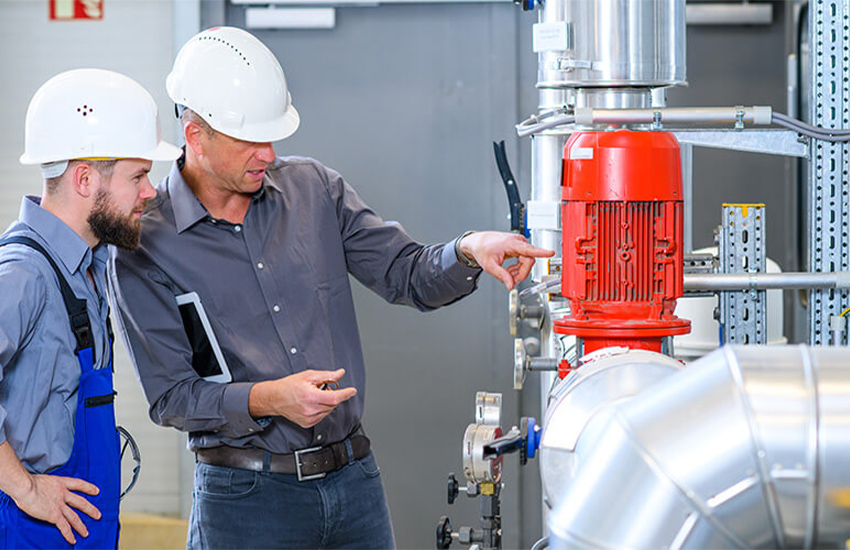
A mechanical engineer specializing in heating, ventilation, and air-conditioning (HVAC) is called an HVAC mechanical engineer. The engineer oversees the design, installation, and operation of systems that heat, cool, and ventilate indoor spaces. An HVAC mechanical engineer typically has mechanical, electrical, and plumbing expertise and is familiar with building codes.

An HVAC mechanical engineer optimizes indoor air quality by controlling temperature and air flow in a building, a complex of buildings, or a single room. Heating and cooling systems make indoor spaces more comfortable. Ventilating equipment keeps air from becoming stale and removes odors.

Engineers commonly plan new projects for their clients. This means creating a step-by-step sequence of all the tasks needed to accomplish a project. For example, an HVAC mechanical engineer might develop a plan for designing and installing a new HVAC system.

An HVAC mechanical engineer manages equipment installation to ensure that the equipment is placed and connected in accordance with the design plan. Performance tests are conducted to confirm the new system operates properly. The engineer also develops a schedule for regular maintenance of the HVAC equipment.

Electrical (Design Services)

Electrical and electronics engineering is the branch of engineering concerned with practical applications of electricity in all its forms. Electronics engineering is the branch of electrical engineering which deals with the uses of the electromagnetic spectrum and the application of such electronic devices as integrated circuits and transistors.

The research functions of electrical and electronics engineering include basic research in physics and other sciences, applied research, design of devices, equipment, and systems for manufacture, field-testing, the establishment of quality control standards, supervision of manufacture and production testing, and engineering management.

Electrical engineering emerged as an occupation in the late 19th Century, following the commercialisation of the electric telegraph, telephone and electrical power generation and distribution. These developments came as a result of early experiments with primitive batteries and static charges, which in turn led to Michael Faraday’s Law of Induction that stated that the voltage in a circuit is proportional to the rate of change in the magnetic field through the circuit. The Law of Induction informed the basic principles used for the electric motor, electric generators and transformers.

Fire Alarm (Design Services)

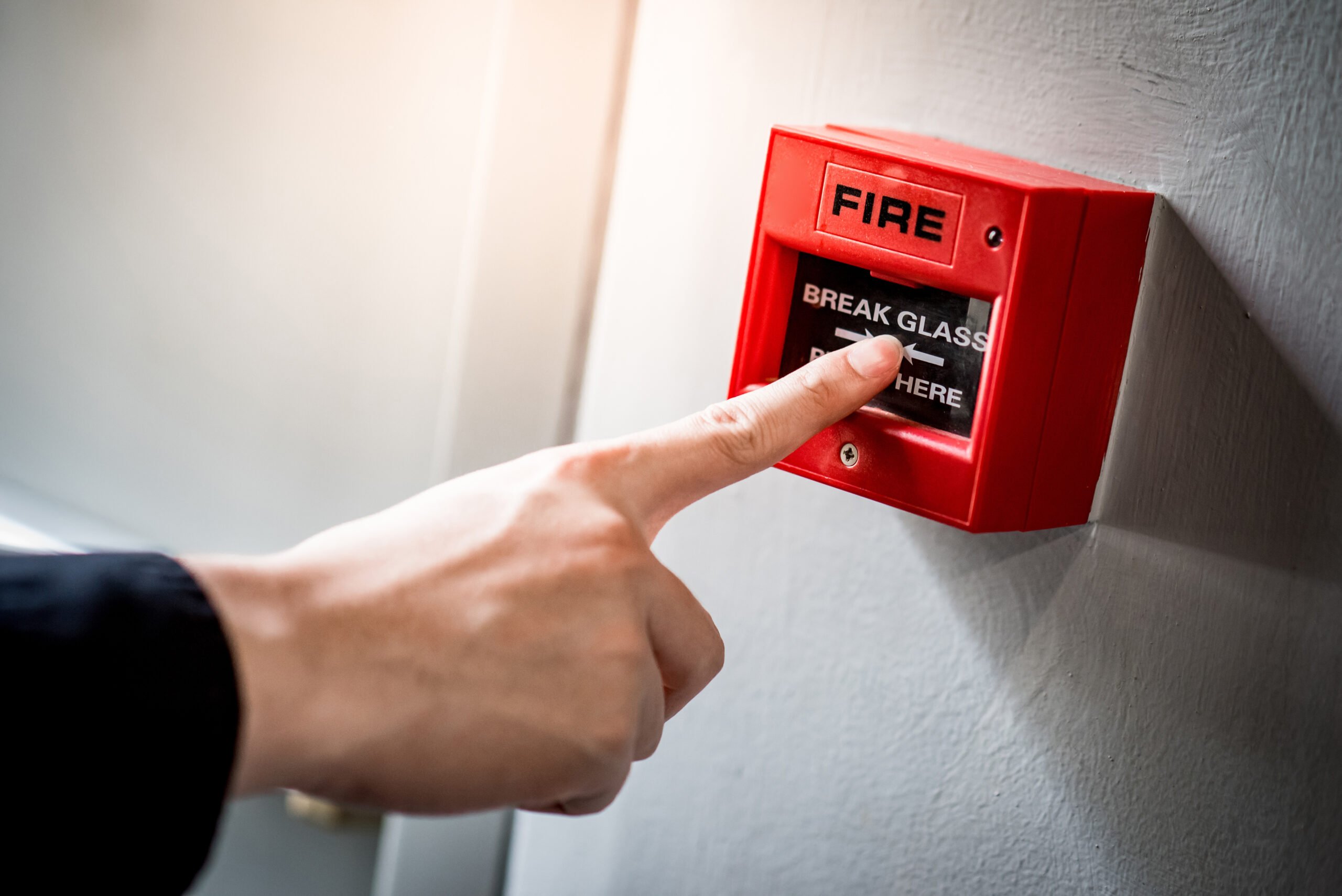
A fire alarm is a unit made of several devices, which uses visual and audio signalization to warn people about a possible fire, smoke, or carbon monoxide occurrence in the area of coverage. Fire alarms are usually set in fire alarm systems to provide zonal coverage for residences and commercial buildings. The warning signal is either a loud siren/bell or a flashing light, or it can include both. Some fire alarm systems use additional warnings, such as sending a voice message or making a phone call.

To determine the most suitable fire alarm system, start by identifying your specific needs. Think about how many detectors need to install in your building. Go for a fire alarm system that is compatible with your current security system. Shop around for equipment that fits within your budget without sacrificing quality. Work closely with the vendor of the fire alarm system to correctly install the fire alarm system and properly integrate it with your existing monitoring and security system.

Wireless fire alarm systems do not use any wiring between the fire control panel and the other devices. Most fire alarms used today are wireless. The most advanced use smart technology, and can be integrated into a smart home with various software applications.

Plumbing (Design Services)

plumbing, system of pipes and fixtures installed in a building for the distribution and use of potable (drinkable) water and the removal of waterborne wastes. It is usually distinguished from water and sewage systems that serve a group of buildings or a city.

One of the problems of every civilization in which the population has been centralized in cities and towns has been the development of adequate plumbing systems. In certain parts of Europe the complex aqueducts built by the Romans to supply their cities with potable water can still be seen. However, the early systems built for the disposal of human wastes were less elaborate. Human wastes were often transported from the cities in carts or buckets or else discharged into an open, water-filled system of ditches that led from the city to a lake or stream.

Sanitary fixture traps provide a water seal between the sewer pipes and the rooms in which plumbing fixtures are installed. The most commonly used sanitary trap is a U bend, or dip, installed in the drainpipe to the outlet of each fixture. A portion of the waste water discharged by the fixture is retained in the U, forming a seal that separates the fixture from the open drainpipes.

Fire Protection (Design Services)

Fire protection refers to measures taken to prevent fires from igniting, reducing the impact of an uncontrolled fire, or extinguishing fires.

Fire protection measures are a broad category that include:

  • Safety drills
  • Education and training on fire risks and safety
  • Workplace inspections aimed at identifying fire hazards
  • Fire-resistant building materials and designs
  • Safe operations
  • Maintenance programs for fire suppression systems

These systems offer protection by controlling, suppressing, or extinguishing fires.

Active fire protection systems include condensed aerosol systems, automatic sprinkler systems, dry chemical systems, and clean agent systems.

Benchmarking (Energy Efficiency and Sustainability Services)

Benchmarking is a process of measuring the performance of a company’s products, services, or processes against those of another business considered to be the best in the industry, aka “best in class.”

The point of benchmarking is to identify internal opportunities for improvement. By studying companies with superior performance, breaking down what makes such superior performance possible, and comparing those processes to how your business operates, you can implement changes that will yield significant improvements.

Benchmarking is a simple, but detailed, five-step process:

  1. Choose a product, service, or internal department to benchmark
  2. Determine which best-in-class companies you should benchmark against – which organizations you’ll compare your business to
  3. Gather information on their internal performance, or metrics

Benchmarking will point out what changes will make the most difference, but it’s up to you to actually put them in place.

Walk-thru to investment grade level strategic energy audits (ASHRAE Level I, II and III) (Energy Efficiency and Sustainability Services)

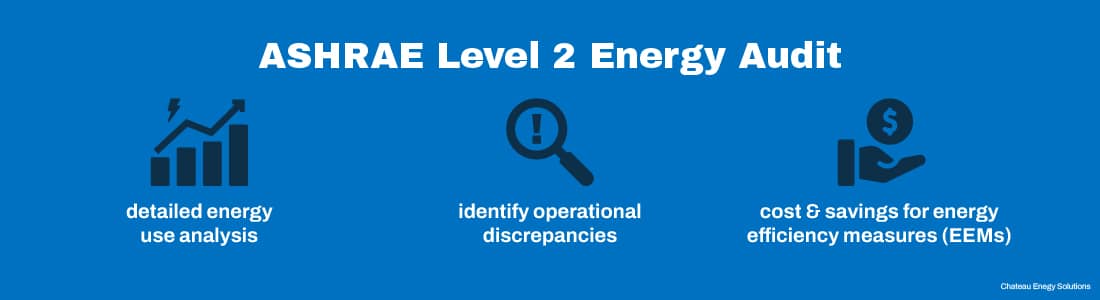
Getting an energy audit is an important starting point for optimizing the building’s energy and financial performance. Audits, also called assessments, provide a record of your asset infrastructure, energy usage, and energy costs. Conducting a building audit gives you a measuring stick of how your facility and its assets are performing today and where work can be done to make it more efficient moving forward. There are several levels of energy audits offered, and sometimes understanding the difference between ASHRAE Level 1, 2, and 3 audits can be confusing. This is a guide to help you determine which one is the best fit for your building.

First, let’s start with a high-level understanding of the purpose of ASHRAE audits. Energy audits identify and develop building and system modifications that will reduce the energy use and/or cost of operating the facility. An energy audit includes the following steps:

  • Collect and analyze historical energy use
  • Study the building and its operation characteristics
  • Identify potential modifications that will reduce the energy use and/or cost
  • Perform an engineering and economic analysis of potential modifications
  • Create a rank-ordered list of appropriate modifications
  • Prepare a report to document the analysis process and results
Commissioning (Energy Efficiency and Sustainability Services)

Commissioning is the process of planning, documenting, scheduling, testing, adjusting, verifying, and training, to provide a facility that operates as a fully functional system per the Owner’s Project Requirements. The goal of the Commissioning Process is to enhance the quality of the delivered project by focusing the design and construction team on the Owner’s goals for a functional and energy efficient building. The earlier a Commissioning Provider is involved in the project process the greater the chance there is for the Commissioning Provider to influence corrections without increased costs later.

Demand for commissioning services is increasing as the design and construction communities require that projects are delivered completely functional, on time, at low cost, and constructed to run in a highly efficient manner. Also, LEED Certification is becoming increasingly popular and mandated by some jurisdictions. The Commissioning process is a requirement of LEED Certified projects. The Commissioning Process helps to achieve all of these goals through review of design documents and construction installation. A third party provider, independent of the design and construction teams, can oversee the quality delivery of the project and provide the Owner with an advocate that will serve the project through completion.

Retro-commissioning and Recommissioning (Energy Efficiency and Sustainability Services)

Retro-Commissioning: the process of increasing cost savings and improving energy savings for a building that may have not been properly commissioned from the start

  • Ideal for: Buildings that have been in existence the longest and are facing commissioning issues and buildings that were never properly commissioned at the start
  • Often times this can be hospitals or schools and similar commercial and industrial buildings that have longer lifespans.

Recommissioning: the process of commissioning that takes place after a building has become operational, but has a need for further or additional system solutions.

  • Ideal for: Underperforming facilities including operational buildings that need smaller repairs, replacements, and resets
  • The building owner may not realize what their facility needs until after the building has been operational for some time. Recommissioning is ideal for buildings that have begun to ‘wear’ or for owners who are looking for ‘green’ energy solutions for their pre-existing mechanical systems
Energy code compliance (Energy Efficiency and Sustainability Services)

Energy Code Compliance

Implementation of energy codes is generally carried out by state and local agencies that are responsible for code compliance, enforcement, and training. These activities ensure that new construction meets the required level of efficiency. Agencies in different cities pursue varying methods of implementation and different levels of enforcement activity.

This sub-category includes information on three topics related to local code implementation: Jurisdiction spending on building code compliance in comparison to residential construction spending; use of alternative code compliance strategies, such as third-party plan review or performance testing; and availability of upfront technical support to owners/developers on energy code compliance at the design and permitting stages.

Energy codes and standards set minimum efficiency requirements for new and renovated buildings, assuring reductions in energy use and emissions over the life of the building. Energy codes are a subset of building codes, which establish baseline requirements and govern building construction.

Energy Modeling (Tabular, ResCheck, ComCheck, Modeling) (Energy Efficiency and Sustainability Services)

Energy Modeling (BEM) sub-program is an important part of BTO and its Emerging Technologies Program. BEM is a versatile, multipurpose tool that is used in new building and retrofit design, code compliance, green certification, qualification for tax credits and utility incentives, and even real-time building control.

Energy-modeling is the virtual or computerized simulation of a building or complex that focuses on energy consumption, utility bills and life cycle costs of various energy related items such as air conditioning, lights and hot water. It is also used to evaluate the payback of green energy solutions like solar panels and photovoltaics, wind turbines and high efficiency appliances. 

Energy-Analysis or Energy-modeling is used to:

  • Predict the monthly energy consumption and bills
  • Predict the annual energy cost
  • Annual CO2 emmissions
  • Compare and contrast different efficiency options
  • Determine life cycle payback on various options
NYC Local Laws Compliance (Local Law 87/09, Local Law 97/19, Local Law 88/09, Local Law 33/18, Loca... (Energy Efficiency and Sustainability Services)

NYC has passed several laws to significantly cut carbon emissions from buildings and improve the quality of life and health of our communities. These laws require building owners to measure, report on, and reduce their building’s energy use and carbon emissions.  

NYC Accelerator is here to help. Our team of experts can walk you through what laws apply to your building and help you develop a plan to reduce emissions, lower operating costs, and avoid future penalties.

Local Law 87 is both a useful and onerous requirement for NYC owners and managers. The process helps to identify energy savings, but the costs of compliance can be significant. ReDocs is better than anyone at closing the gap between the problems and the benefits that this law creates.

With Local Law 97, New York City has one of the most ambitious plans for reducing emissions from buildings in the nation. As a part of New York City Green New Deal, the law was included in the Climate Mobilisation act passed by the City Council in April 2019.